Find Me Mexico
Teotihuacan
Teotihuacan Group Tour
from $1,000 MXN
Teotihuacan Private Tour
$2,800 MXN per person
Hot Air Balloon at Sunrise
from $3,200 MXN
In Mexico City
Anthropology Museum TourComing soon
Lucha Libre NightComing soon
Book a tour
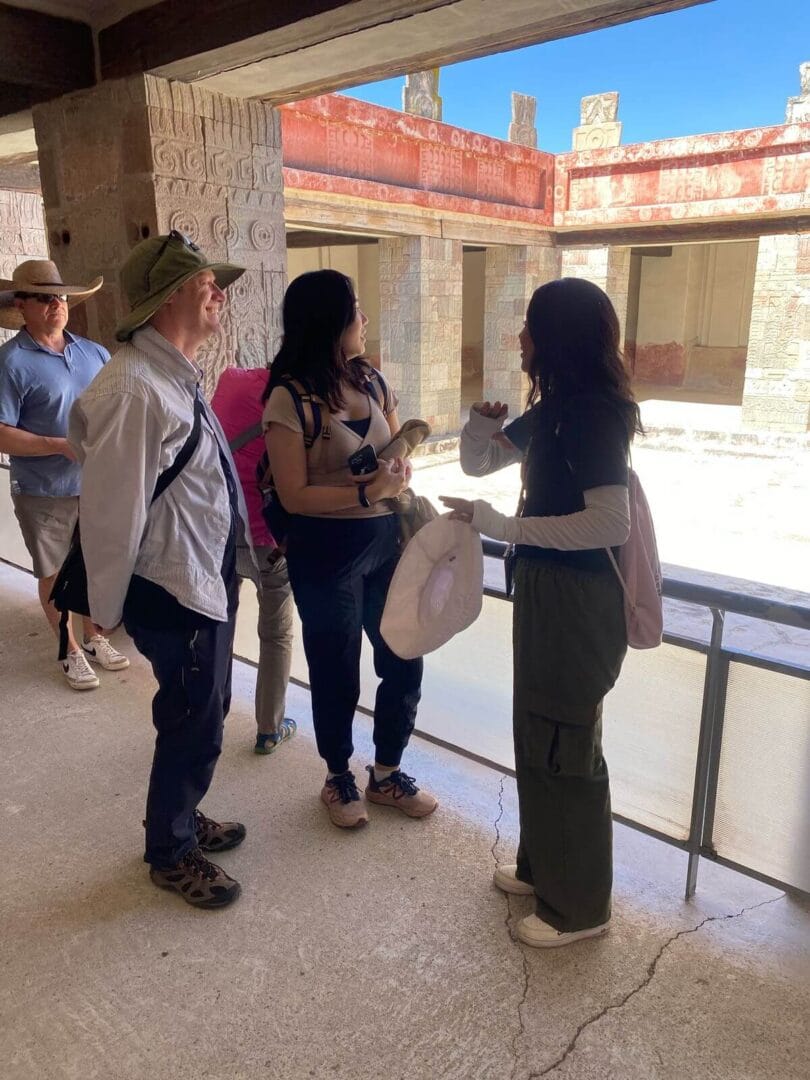
This page is part of my Teotihuacan guide, where you can find every pyramid and temple at the site. And if you're planning your trip, my Plan Your Visit page has the hours, tickets and how to get there.
We don't know for sure who built Teotihuacan. The people who lived here didn't leave any writing we can read, so we don't know what they called themselves, what language they spoke or even what they called their city.
But we do know who it was NOT. It wasn't the Aztecs, because the city was empty for hundreds of years before they got here. It wasn't the Maya either, they lived far to the south. And it wasn't the Toltecs, because they came centuries later.
Archaeologists have proposed a few groups, like Nahua, Otomi and Totonac people. And a lot of them think it was a mix, because Teotihuacan had neighborhoods for people from other places.
One of them is called Tlailotlacan, and the people there came mostly from Oaxaca. They built their tombs the Oaxaca way, used Zapotec style pottery, and their bones show they traveled back and forth to Oaxaca.
Another one is the Merchants' Barrio, with round adobe houses and pottery from the Gulf Coast. So when you walk around Teotihuacan, you're walking in a city where people from all over Mexico lived together, and I think that's one of the coolest things about it :)
Teotihuacan started as a city around 100 BCE, but before that there were small farming villages in the valley for a few hundred years. The valley had a lot of springs, so there was water for farming.
The other big city in the area was Cuicuilco, in the south of what is now Mexico City. Eruptions of the Xitle volcano and of Popocatepetl damaged the land down there, and archaeologists think a lot of people moved north to the Teotihuacan valley. You can still visit what's left of Cuicuilco today, and I talk about it on my pyramids near Mexico City page.
The Pyramid of the Sun was built around 100 CE, and the city grew really fast around it. Then around 200 to 250 CE they built the Temple of the Feathered Serpent, and archaeologists found more than 200 people buried in and around it as part of a sacrifice when it was built.
The Pyramid of the Moon was built in layers over hundreds of years, one on top of the other. And the whole center of the city follows the same grid, lined up with the Avenue of the Dead.
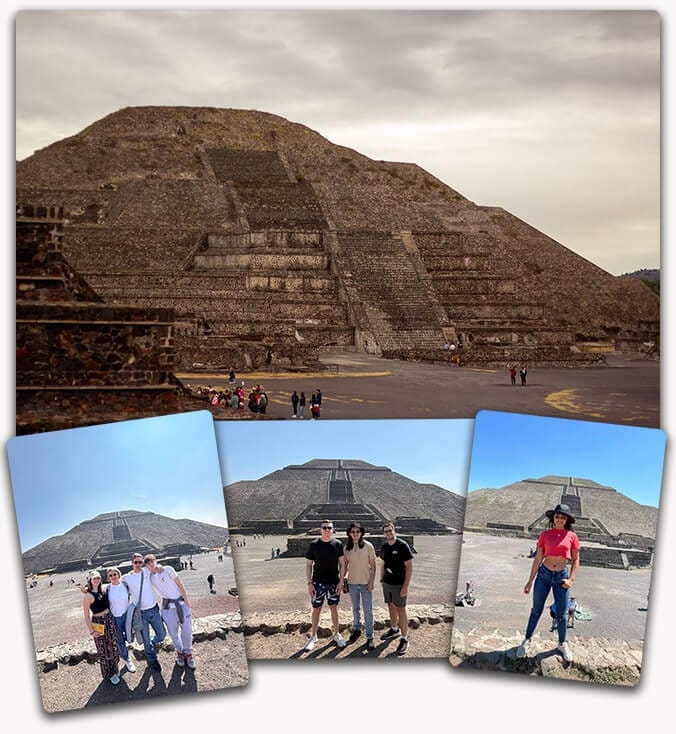
Around 500 CE between 125,000 and 200,000 people lived in Teotihuacan, and it was the biggest city in the Americas at that time. The city covered about 20 square kilometers, which is about 8 square miles.
Most people didn't live in single houses. They lived in apartment compounds, big buildings with stone walls and patios inside, and archaeologists counted about 2,000 of them. Each one had around 60 to 100 people, usually families or people who did the same work.
Obsidian is a black and green volcanic glass, and back then people used it for knives, arrowheads and tools. Most of the obsidian came from mines near Pachuca, and Teotihuacan controlled the trade of it in the whole region.
That's why our guides always show you obsidian when we're at the site, because without it the city wouldn't have been this big.
If you like numbers, I put all of them on my Teotihuacan facts and statistics page with the source for each one.
Yes, and it's one of the best stories from Teotihuacan. The Maya wrote things down, and one of their stones at Tikal, in Guatemala, says that in January of 378 CE a man called Siyaj K'ak' arrived from the west and the king of Tikal was removed the same day.
A lot of archaeologists think Siyaj K'ak' came from Teotihuacan, which is about 1,000 km away. After that, the new kings of Tikal used Teotihuacan style in their art for years. And in 426 CE a man with Teotihuacan connections started the royal family of Copan, in Honduras.
The Maya even had a name for Teotihuacan, "puh", which means "place of reeds". So it's the Maya, NOT the people of Teotihuacan, who tell us the most about what Teotihuacan was doing far from home.
Around 550 CE the main buildings in the center of the city were burned, along the Avenue of the Dead and around the Feathered Serpent temple.
For a long time people thought an army from outside did it. But archaeologists found that mostly the buildings of the rulers were burned, and there's no sign of an invasion, so most of them now think the people of the city rose up against the people in charge.
Also, around 535 to 536 CE there was a big change in the climate, probably from a volcano in El Salvador, and it brought drought. Archaeologists found skeletons of kids from this time that show they didn't get enough food.
After the fire, the city got smaller and smaller. The population went down to about 30,000 or fewer, and by 750 to 800 CE it was mostly empty.
And don't worry, the city wasn't lost. People kept living in the valley, and the pyramids were always there for everyone to see.
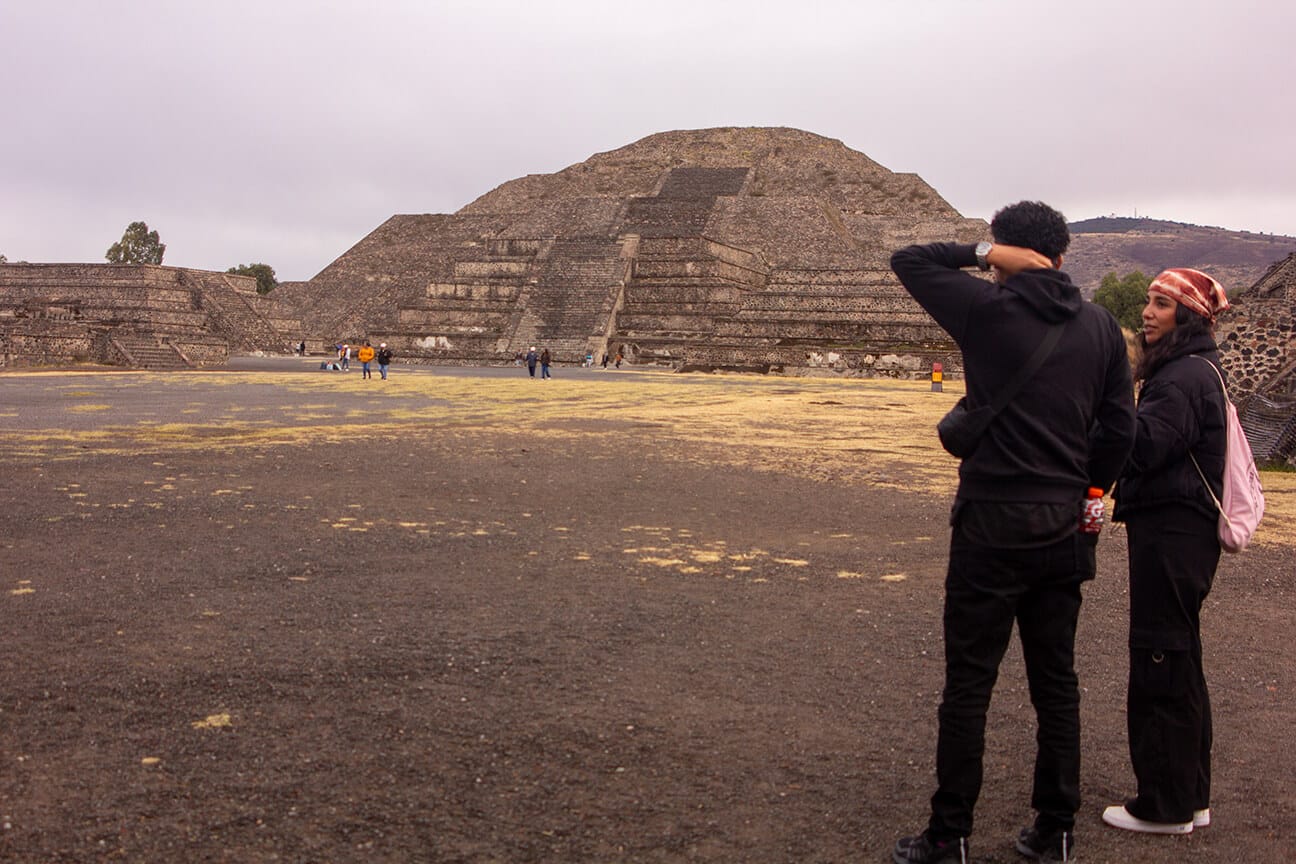
The Aztecs found Teotihuacan in ruins in the 1400s, about 600 years after it was empty. They named it Teotihuacan, which means "the place where the gods were created" in Nahuatl. It was a place of pilgrimage for them.
The Aztecs believed the world was dark, and the gods met at Teotihuacan to make a new sun. Two gods, Nanahuatzin and Tecuciztecatl, had to jump into a big fire. One became the Sun and the other became the Moon. This story is written in the Florentine Codex, a book made in the 1500s with Aztec elders.
So the names you hear today come from the Aztecs too. They named the Pyramid of the Sun and the Pyramid of the Moon, and they thought the platforms along the main road were tombs, so they called it Miccaotli, the road of the dead.
That's also why so many people wear white and go to the pyramids on the spring equinox. That tradition is new, but it comes from the idea that Teotihuacan is a place of the sun.
Teotihuacan was never really lost, because people could always see the pyramids. But here are the big moments in how archaeologists studied it.
Archaeologists are still digging at Teotihuacan today, so the history is still changing, and that's why I check the facts on this page and put the date at the top.
The site has signs, but most of them are short, and a lot of the history on this page isn't written anywhere at the pyramids. So I recommend to go with a certified guide, because otherwise it's hard to understand what you're seeing. My how to find the best Teotihuacan tour guide post shows you how to check that a guide is really certified.
You can also go on your own, and my Teotihuacan without a tour post and my how to get to Teotihuacan guide explain how. And if you're not sure, read is a Teotihuacan tour worth it first.
All of our Teotihuacan tours are in English with our SECTUR-certified local guides, we pick you up and drop you off at your hotel or Airbnb, your tickets are included and we NEVER stop at tourist trap shops.
Every tour has our 100% "Love It or Your Money Back" guarantee, and you can cancel or reschedule for FREE up to 24 hours before.
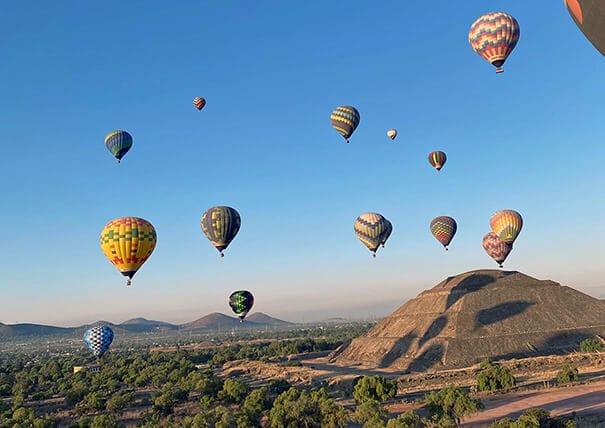
If you want a Teotihuacan tour or a sunrise hot air balloon above the pyramids... that's what me and my team do. You can compare every tour side by side and pick the one that fits you :)